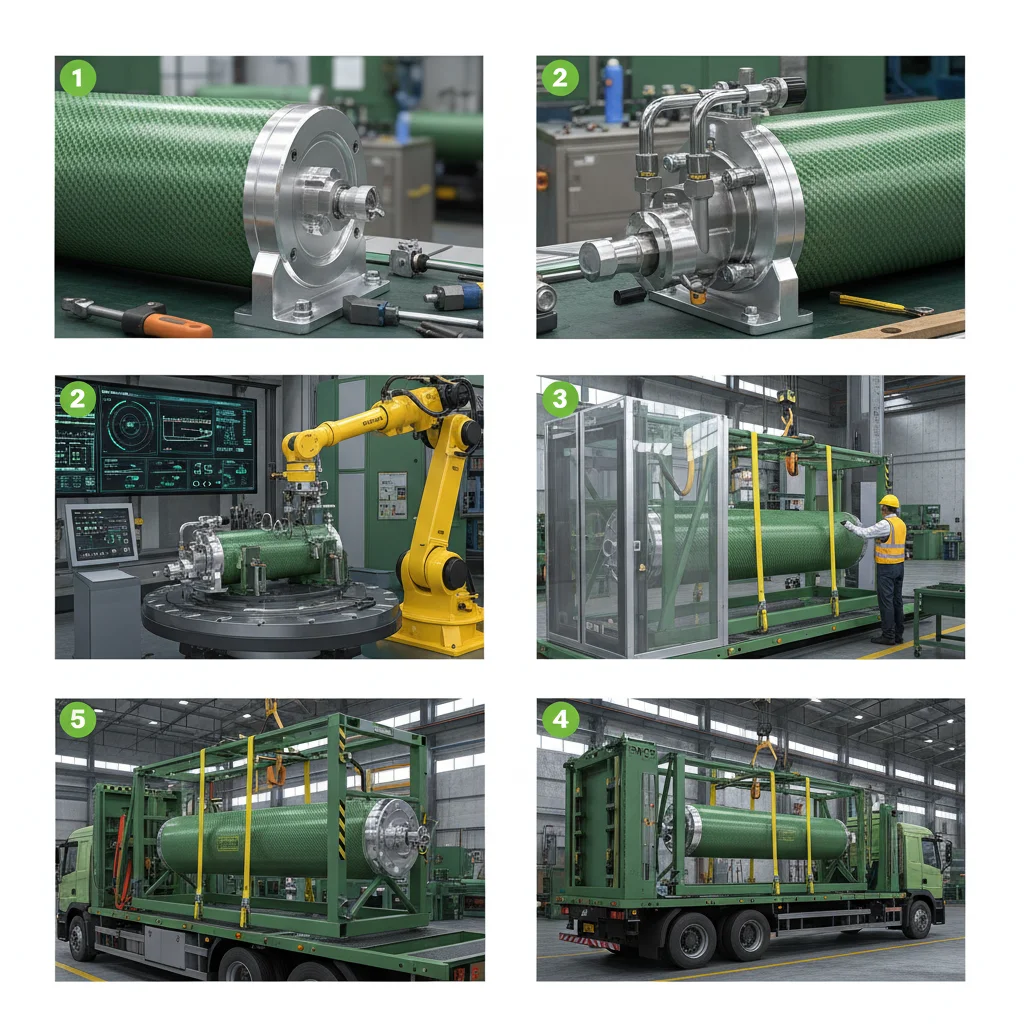
When evaluating the cng 12kg cylinder price, most procurement managers focus solely on the initial invoice amount. However, in the specialized field of gas compression and separation equipment, the sticker price is only one component of the total cost of ownership. The real value of a compressed natural gas (CNG) cylinder is determined by its pressure rating, material integrity, and the certifications it carries, which collectively dictate the safety and longevity of the energy infrastructure.
For operators in the Chemicals, Green Energy, and Natural Gas sectors, selecting a cylinder that balances cost with technical reliability is critical. A low-cost cylinder with inferior wall thickness or poor corrosion resistance can lead to premature failure, increasing the risk of hazardous leaks and necessitating frequent, costly replacements. Understanding the relationship between material grade and operational lifespan allows companies to optimize their investment in high-pressure storage.
This analysis examines the technical drivers that influence the cng 12kg cylinder price and provides a framework for choosing equipment that meets international safety standards. By shifting the focus from unit price to lifecycle efficiency, industrial users can secure a more stable and lower-carbon energy supply chain.


A CNG cylinder is not merely a metal container but a precision-engineered pressure vessel designed to store natural gas at significantly high pressures. The primary function is to maintain the structural integrity of the compressed gas while resisting internal stresses and external environmental degradation. For a 12kg capacity unit, the engineering focus is on the strength-to-weight ratio, ensuring that the vessel remains portable yet capable of handling extreme working pressures without deformation.
The operational principle relies on the elastic deformation limits of the chosen material. Whether using high-grade carbon steel or advanced composites, the cylinder must withstand repetitive filling and discharging cycles. This process creates fatigue stress on the vessel walls, making the precision of the heat treatment and welding processes critical to preventing catastrophic failure over the product's intended lifespan.
The variance in cng 12kg cylinder price is primarily driven by the grade of materials used and the rigor of the certification process. Utilizing premium alloys like SA-516 Gr.70 or Q345R increases the base cost but ensures superior structural integrity. These materials are specifically selected for their toughness and resistance to brittle fracture, which is essential for safety in industrial gas environments.
Another significant cost driver is the compliance with international standards such as ASME or GB. Achieving dual certification requires more stringent testing protocols, including hydraulic pressure tests and non-destructive examination (NDE) of the welds. While these requirements increase the initial production cost, they provide the necessary assurance for global deployment in regulated markets across North America, Europe, and Asia.
Furthermore, the inclusion of a corrosion allowance—such as a 1.0mm added thickness—directly affects the material volume and price. This engineering decision extends the service life of the cylinder, protecting the vessel from oxidation and chemical erosion, which is particularly vital for cylinders used in humid or coastal industrial zones.
True value in gas storage is realized when the initial expenditure is spread over an extended operational window. High-quality cylinders are engineered for a design life of 20 years, significantly reducing the annualized cost compared to budget alternatives that may require replacement every decade. This longevity is achieved through optimized shell thickness calculations and precision-engineered head designs.
The most critical ROI indicator for CNG storage is the ratio of payload capacity to maintenance frequency. By utilizing ASME-certified materials and a standardized corrosion allowance, operators can minimize downtime and avoid the high costs associated with emergency vessel replacement and safety audits.
Beyond the physical hardware, the operational efficiency is enhanced by maintaining a consistent filling ratio (typically 85%-90%). This ensures sufficient vapor space for safe thermal expansion, preventing over-pressurization during temperature spikes and thus preserving the structural health of the cylinder over thousands of cycles.
When comparing different grades of storage vessels, the impact of material quality on safety margins and longevity becomes evident. Standard carbon steel may offer a lower entry price, but it lacks the fatigue resistance found in specialized pressure vessel steels like SA-516 Gr.70. The latter is designed for moderate to lower temperature service, providing better reliability in varied climates.
The following data illustrates the relative performance differences between standard grade and premium high-pressure vessels across key lifecycle indicators.
The 12kg capacity is specifically optimized for localized energy distribution and mobile industrial applications. In the semiconductor and electronic gas industries, these cylinders are used to transport high-purity specialty gases to specific workstations where large-scale piping is impractical. Their size allows for easy integration into mobile gas racks, providing the flexibility needed for rapid facility reconfiguration.
In the realm of green energy and hydrogen transition, similar small-scale high-pressure vessels serve as critical components for prototype energy systems and emergency backup power. The ability to maintain high pressure in a compact form factor makes them ideal for remote sites where traditional natural gas pipelines are unavailable, supporting off-grid industrial operations with reliable clean energy.
The trajectory of the gas equipment industry is moving toward lower-carbon materials and higher storage densities. We are seeing a shift toward advanced composite liners and hybrid materials that can withstand higher working pressures while reducing the overall weight of the cylinder. This evolution is driven by the need for more efficient hydrogen and electronic gas transportation.
Digital integration is another emerging trend. Future storage systems are likely to incorporate smart monitoring sensors that provide real-time data on pressure, temperature, and wall thickness degradation. This transition from scheduled maintenance to condition-based maintenance will further optimize the lifecycle costs and safety of high-pressure assets.
As global regulations tighten around energy safety, the demand for dual-standard certification (such as GB and ASME) will become the baseline requirement rather than a premium feature. Companies that invest in globally compliant infrastructure today will be better positioned to navigate the evolving regulatory landscape of the energy transition.
Procuring high-pressure cylinders involves navigating a complex set of technical specifications and safety certifications. The primary challenge for buyers is distinguishing between a "low-cost" product and a "high-value" asset. Relying on a supplier with comprehensive qualifications, like SHIJIAZHUANG ENRIC GAS EQUIPMENT CO., LTD., ensures that the equipment meets the actual operational demands of the site.
A critical part of the selection process is the verification of material certificates and pressure test reports. Buyers should insist on seeing the hydraulic test results, which verify the structural integrity of the vessel at pressures significantly higher than the maximum working pressure (e.g., testing at 2.25MPa for a 1.724MPa working pressure).
Finally, considering the total lifecycle cost—including corrosion allowance and expected service life—prevents the trap of short-term savings leading to long-term operational risks. The following table provides a decision matrix for evaluating different cylinder grades based on industrial requirements.
| Evaluation Criteria | Standard Grade | Premium Grade | Custom Solution |
|---|---|---|---|
| Material Quality | Basic Carbon Steel | SA-516 Gr.70 / Q345R | Tailored Alloy |
| Certification | Local Only | GB & ASME Dual | Project Specific |
| Service Life | 10-12 Years | 20 Years Guaranteed | Customized |
| Safety Margin | Standard Walls | Enhanced + Allowance | Maximized |
| ROI Period | Moderate | High (Low Replace) | Optimized |
| Ideal Use Case | Low-Risk Sites | Industrial/Chemical | Extreme Env. |
The price is primarily determined by the material grade (such as SA-516 Gr.70), the thickness of the walls including the corrosion allowance, and the international certifications held (ASME vs. GB). Higher-grade materials and dual certifications increase the initial cost but ensure a longer service life and higher safety margins.
A corrosion allowance, such as 1.0mm, provides an extra layer of material that can be sacrificed to oxidation and chemical erosion without compromising the vessel's structural integrity. This ensures the cylinder can safely reach its 20-year design life even in harsh industrial environments.
Yes. GB refers to Chinese National Standards, while ASME is the American Society of Mechanical Engineers standard. ASME standards typically involve different wall thickness calculations and material specifications to meet international safety codes, making them more suitable for global export and high-risk industrial applications.
The recommended filling ratio is generally 85% to 90%. This leaves a necessary headspace of vapor to allow for safe thermal expansion of the gas, which prevents the internal pressure from exceeding the design limits during temperature fluctuations.
Yes, customized designs are possible. While standard capacities exist, engineering teams can modify shell thickness and head configurations to meet specific working pressures or site dimensions, ensuring the vessel is optimized for the user's exact technical needs.
Inspection frequency depends on regional regulations, but generally, a comprehensive safety audit and pressure test are recommended every 5 to 10 years. However, daily monitoring of pressure gauges and visual checks for external corrosion should be standard operational procedure.
Selecting the right CNG storage solution requires a balance between the initial cng 12kg cylinder price and the long-term requirements of safety and durability. By prioritizing ASME-certified materials, adequate corrosion allowances, and a proven design life of 20 years, industrial operators can significantly reduce their total cost of ownership while mitigating the risks associated with high-pressure gas containment.
For enterprises seeking to optimize their clean energy infrastructure with reliable and compliant storage equipment, exploring precision-engineered solutions is the most sustainable path forward. You can find more detailed technical specifications and customized vessel options by visiting our official site at www.enricgroupsjz.com.