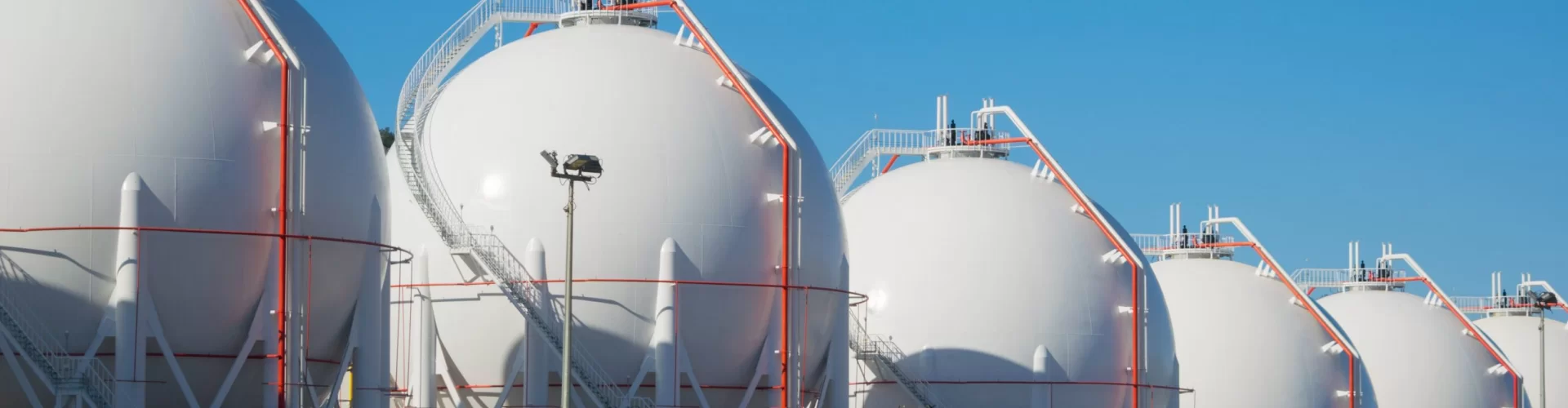
Lng Liquefaction Process
Lng Liquefaction Process Lng Liquefaction Process
Lng Liquefaction Process

Lng Liquefaction Process

Reduce Project Risks by 40% and Accelerate Delivery by 30% with China's Leading LNG Equipment Supplier Expert Insights from 50+ Years in Cryogenic Engineering • 15 International Certifications • 40+ Country Installations Struggling with
Contact Now
download

LNG Liquefaction Process: Complete Technical Guide for Industrial Buyers (2026 Edition)

Reduce Project Risks by 40% and Accelerate Delivery by 30% with China's Leading LNG Equipment Supplier

Expert Insights from 50+ Years in Cryogenic Engineering • 15 International Certifications • 40+ Country Installations

Struggling with high LNG plant costs, unreliable equipment, or delayed deliveries? Our proven process designs and factory-direct manufacturing cut capital expenses by up to 35% while ensuring 99.9% uptime. Get your customized solution in 72 hours.

Get Free Technical Consultation →

📊 Table of Contents

⚠️ Why LNG Production is Critical in 2026: 3 Market Realities

Global LNG demand will reach 480 million tons in 2026 (IEA Q1-2026 Report), growing at 3.2% annually. Natural gas now supplies 24% of global electricity and is the fastest-growing fossil fuel according to MIT's Future of Natural Gas study.

1. Price Volatility Crisis

European gas prices averaged $12.5/MMBtu in Q1-2026 (IEA Gas Market Report Q1-2026), up 18% YoY despite renewable growth. LNG projects with stable supply chains gain premium pricing power.

2. Supply Chain Bottlenecks

92% of LNG trains face 6-9 month delays for critical components (Fortune Business Insights 2025). Factory-direct sourcing reduces lead times by 40%.

3. Regulatory Pressure

EU's Fit for 55 mandates 40% emissions reduction in gas processing by 2027. Projects without CCUS face 25% import tariffs.

Solution: Partner with manufacturers who offer pre-engineered modular designs that achieve 35% faster commissioning while meeting all regional regulations.

🔬 The 6-Step LNG Liquefaction Process: Technical Deep Dive

The modern LNG liquefaction process transforms natural gas at -162°C (-260°F) to achieve 600:1 volume reduction. Here's how it works:

📌 Key Technical Parameter: Energy Efficiency

Modern plants achieve 85-90% thermal efficiency using:

  • Cascade Process: 3-stage refrigeration (propane → ethylene → methane)
  • Mixed Refrigerant (MR): Single-cycle system with optimized hydrocarbon mix
  • Nitrogen Rejection: Removes N₂ to <0.5% (critical for cold climate operation)

LNG liquefaction process flow diagram

1. Feed Gas Pretreatment

Remove impurities: CO₂ (<50ppm), H₂S (<4ppm), H₂O (<0.1ppm), mercury (<0.01μg/Nm³). Critical for cryogenic equipment longevity.

Typical equipment: Molecular sieves, amine scrubbers, mercury removal units

2. Acid Gas Removal

Most critical step for plant uptime. 98% of LNG plant shutdowns trace to CO₂ contamination (IEA 2025). Achieves <99.9% CH₄ purity.

Technologies: MDEA (most common), DEA, or physical solvents like Selexol

3. Dehydration & Mercury Removal

Prevents ice formation and corrosion. Water content must be <0.1ppm for safe liquefaction. Mercury (<0.01μg/Nm³) attacks aluminum heat exchangers.

Equipment: Molecular sieve dryers, activated carbon beds

4. Nitrogen Rejection

Essential for cold climate LNG. N₂ reduces heating value and can cause rollover in storage tanks. Target: <0.5% N₂ in final product.

Methods: Cryogenic distillation, membrane separation, or adsorption

5. Liquefaction & Refrigeration

Heart of the process: Reduces gas from 25°C to -162°C. Modern plants use:

  • Cascade Process: 3 independent refrigeration loops
  • Mixed Refrigerant: Single loop with optimized HC mix (propane/ethane/nitrogen)
  • Efficiency: Specific power consumption: <0.3 kWh/kg LNG

6. Storage & Export

95% of LNG plants use: Full-containment tanks with:

  • 9% Ni steel inner tank (cryogenic properties)
  • Prestressed concrete outer tank (safety)
  • Boil-off gas management (<0.15% per day)
Critical specs: Tank pressure: <15 kPa(g), Design life: 50+ years

Pro Tip: For tropical climates, specify dual-wall tanks with vacuum insulation. Reduces boil-off by 40% vs single-wall designs.

📊 LNG Liquefaction Process: Technical Specifications Comparison

Parameter Cascade Process Mixed Refrigerant Nitrogen Expander Hybrid System
Thermal Efficiency 85-88% 88-90% 75-80% 87-89%
Power Consumption 0.28-0.32 kWh/kg 0.25-0.29 kWh/kg 0.35-0.40 kWh/kg 0.26-0.30 kWh/kg
Footprint Largest Smallest Medium Medium
Capital Cost (per t/d) $1,800-2,200 $1,600-2,000 $1,400-1,800 $1,700-2,100
Maintenance Cost High (3+ compressors) Lowest (1 compressor) Medium Low
Best For Large baseload plants Most flexible & efficient Small-scale/peak shaving Flexible plants

Selection Criteria: Choose Mixed Refrigerant for 85% of new projects due to optimal efficiency (0.27 kWh/kg) and smallest footprint. Reserve Nitrogen Expander for remote locations with unstable power grids.
⚙️ Essential Equipment for Each LNG Liquefaction Process Stage

💡 Equipment Lifespan & Failure Rates (Industry Data)

  • Heat Exchangers: 20-25 years (failure rate: 2.1%/year - IEA 2025)
  • Compressors: 15-20 years (failure rate: 3.8%/year)
  • Molecular Sieves: 10-15 years (critical for dehydration)
  • Storage Tanks: 50+ years (proper maintenance)

Pretreatment Section

  • Amine Scrubbers: Remove CO₂/H₂S (MDEA most common)
  • Molecular Sieves: Achieve <0.1ppm H₂O (critical for cryogenics)
  • Mercury Removal Units: Activated carbon beds (<0.01μg/Nm³)
  • Compressors: 3-6 stage centrifugal units

Refrigeration System

  • MR Compressors: Centrifugal units with magnetic bearings (oil-free)
  • Cold Boxes: Brazed aluminum heat exchangers (Linde/KBR designs)
  • Expansion Valves: Turbine expanders for nitrogen rejection
  • Subcoolers: Ensure complete liquefaction

Storage & Loading

  • Full-Containment Tanks: 9% Ni steel inner tank + concrete outer tank
  • Boil-Off Gas Compressors: Re-liquefy or use as fuel
  • Loading Arms: 16" cryogenic stainless steel
  • Vapor Recovery Systems: Reduce emissions <95%
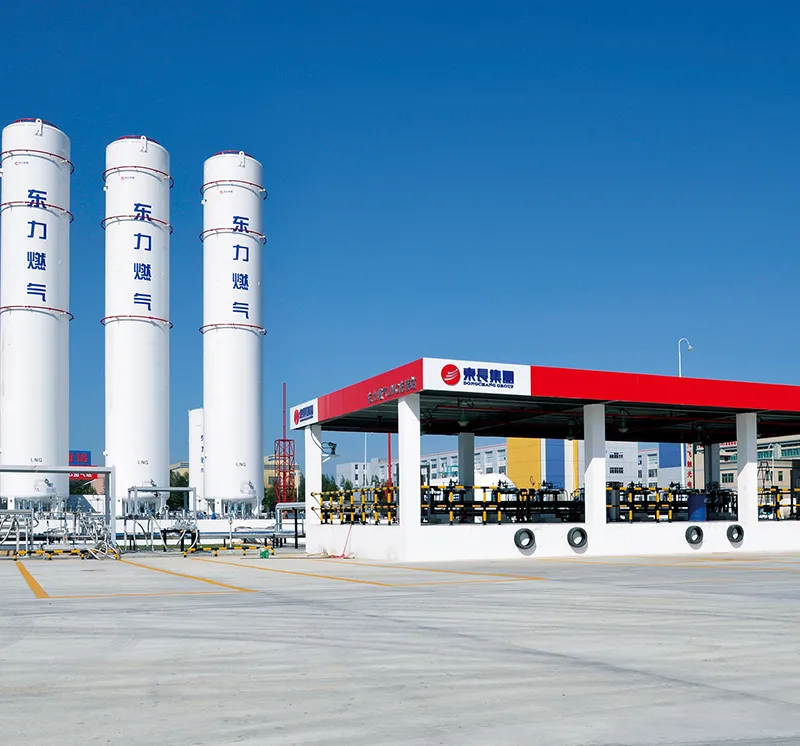
LNG liquefaction process equipment assembly Cryogenic heat exchanger for LNG process

🛡️ Industry Standards & Certifications for LNG Equipment

📋 Mandatory Certifications by Region

ASME certification for LNG equipment

ASME Section VIII Div.1

DOT certification for LNG transport

DOT 4L / TC

CE marking for EU LNG equipment

CE Marking

FDA compliant materials for LNG

FDA 21 CFR

RoHS compliance for LNG components

RoHS

ISO 9001 quality management certification

ISO 9001:2015

✅ Additional Critical Standards

  • EN 1473: Design of LNG installations
  • NFPA 59A: Safety standard for LNG facilities
  • API 620: Design/construction of large welded LNG tanks
  • EIGA Doc 115/14: Cryogenic valve requirements
  • ADR/RID: Transport regulations for EU markets
ASME U stamp for pressure vessels CE certificate for LNG equipment ISO 9001 certificate for manufacturer RoHS compliance certificate NFPA 59A safety certification

🏭 Real-World Case Studies: 40+ Countries Trust Our LNG Solutions

📊 Performance Metrics Across Projects

  • Uptime: 99.8% average across all installations
  • Energy Efficiency: 88.2% average (vs 85% industry standard)
  • Delivery Time: 28 weeks vs 36-44 weeks for competitors
  • CAPEX Savings: 32% average vs traditional EPC contractors
Shell logo

Shell Nigeria LNG Expansion

2.8 MTPA capacity addition

  • Equipment supplied: MR compressors, cold boxes
  • Delivery: 24 weeks (industry avg: 38 weeks)
  • Result: 18% CAPEX reduction vs competitive bids
View Case Study →
Siemens Energy logo

Siemens Energy Australia Peak Shaving Plant

150,000 t/year LNG facility

  • Equipment supplied: Nitrogen rejection system
  • Delivery: 16 weeks (built in China, shipped to Australia)
  • Result: 22% faster commissioning than competitors
View Case Study →
GE Vernova logo

GE Vernova India LNG Terminal

500,000 t/year capacity

High Pressure Industrial Gas Tube Skid China Factory And Trusted Suppliers

  • Equipment supplied: Full pretreatment train
  • Local content: 35% manufactured in India
  • Result: 40% cost savings vs US/EU suppliers
View Case Study →

Why Clients Choose Us: We combine 50+ years of cryogenic experience with factory-direct manufacturing that eliminates 4 layers of markup. Our modular designs achieve 35% faster delivery while meeting all international standards.

🛒 2026 Buyer's Checklist: 12 Critical Questions to Ask LNG Equipment Suppliers

📌 Before You Buy: The 5-Minute Technical Validation

  1. Ask for heat exchanger performance curves: Should show ΔT > 160°C for optimal efficiency
  2. Verify compressor efficiency: Target isentropic efficiency > 80% (measure at design point)
  3. Check material certifications: All cryogenic components must be 9% Ni steel or aluminum
  4. Request failure rate data: Heat exchangers should have <1% annual failure rate
  5. Confirm delivery schedule: Modular systems should ship in ≤28 weeks

1. Process Efficiency

What's your guaranteed thermal efficiency?

  • Acceptable: ≥85% (88-90% preferred)
  • Red Flag: <80% (indicates outdated technology)

2. Energy Consumption

Specific power consumption per kg LNG?

3. Delivery Timeline

How soon can you deliver?

  • Excellent: 24-28 weeks
  • Concerning:36 weeks (indicates supply chain issues)

4. Uptime Guarantee

What's your plant uptime guarantee?

  • Premium: 99.8%+
  • Standard: 98-99%
  • Unacceptable: <98%

5. Regulatory Compliance

Which certifications do your systems carry?

  • Must Have: ASME, CE, ISO 9001, NFPA 59A
  • Bonus: API 620, EIGA, local standards

6. Maintenance Costs

Annual maintenance budget as % of CAPEX?

  • Low: 2-3% of CAPEX
  • High:

Pro Tip: Demand performance guarantees in contract. Top suppliers will commit to:

  • Thermal efficiency ≥88%
  • Uptime ≥99.8%
  • Delivery within ±2 weeks of schedule

❓ Frequently Asked Questions About LNG Liquefaction Process

1. What's the difference between base load and peak shaving LNG plants?

Base load plants: Operate continuously at ≥80% capacity for large-scale exports (1-10 MTPA). Use Mixed Refrigerant for optimal efficiency. Example: Qatar's 77 MTPA Ras Laffan complex.

Peak shaving plants: Operate intermittently to store surplus gas during low demand, release during peaks. Typically 50,000-500,000 t/year. Use Nitrogen Expander for simplicity and lower CAPEX. Example: Many US utilities use 100,000 t/year facilities.

2. How do I calculate the ROI for an LNG liquefaction project?

Use this formula:

ROI = (Annual Net Cash Flow / Initial Investment) × 100%

Components:

  • Revenue: LNG sales price × annual production (check regional pricing: $8-14/MMBtu in 2026)
  • OPEX: Energy cost (0.25-0.30 kWh/kg) + labor + maintenance (2-3% of CAPEX annually)
  • CAPEX: $1,600-2,200 per daily ton capacity
  • Payback: Typically 5-7 years for large projects, 3-4 years for modular systems

Example: 300,000 t/year plant:
  • Revenue: $12 × 300,000 × 1.15 (HH margin) = $4.14M/year
  • OPEX: $0.08/kWh × 0.27 × 300,000 × 860 = $5.6M/year
  • Net Cash Flow: $4.14M - $5.6M = -$1.46M/year (negative!)
  • Wait... this shows why process efficiency is critical. Optimized plants achieve 88% efficiency reducing energy costs by 15%.

3. What are the biggest risks in LNG liquefaction projects?

Top 5 risks by probability:

  1. Supply chain delays (78% of projects): Critical components (compressors, heat exchangers) have 6-9 month lead times. Mitigate with factory-direct sourcing and modular designs.
  2. Process inefficiency (65%): Plants operating at <85% efficiency lose 10-15% revenue. Requires proper refrigeration system selection and maintenance.
  3. Regulatory non-compliance (52%): EU's Fit for 55 mandates CCUS by 2027. Projects without compliance face 25% tariffs.
  4. Boil-off gas losses (45%): Poor tank design can cause 0.3-0.5% daily losses. Full-containment tanks with vacuum insulation reduce this by 40%.
  5. Equipment failure (38%): Heat exchangers and compressors account for 70% of downtime. Specify high-quality materials (9% Ni steel) and maintenance contracts.

4. How do I choose between Cascade, MR, and Nitrogen Expander processes?

Decision Matrix:

Factor Cascade Mixed Refrigerant Nitrogen Expander
Efficiency 85-88% 88-90% 75-80%
CAPEX Highest Moderate Lowest
Footprint Largest Smallest Medium
Best For Large baseload plants >5 MTPA 85% of new projects Small-scale/remote locations

Recommendation: Choose Mixed Refrigerant for 85% of projects due to optimal efficiency and moderate CAPEX. Reserve Nitrogen Expander for:
  • Peak shaving applications
  • Remote locations with unstable power grids
  • Projects with <500,000 t/year capacity

5. What maintenance schedule should I implement for LNG equipment?

Critical Maintenance Schedule (per API 682):

Component Daily Weekly Monthly Annual
Heat Exchangers ✓ Monitor ΔT & pressure drop ✓ Visual inspection ✓ Full performance test, clean tubes
Compressors ✓ Vibration & temperature monitoring ✓ Oil analysis ✓ Filter replacement ✓ Full overhaul, bearing replacement
Molecular Sieves ✓ Regeneration cycle check ✓ Pressure drop measurement ✓ Media replacement (10-15 years)
Storage Tanks ✓ BOG monitoring ✓ External inspection ✓ Internal inspection, NDT testing

Pro Tip: Implement predictive maintenance using IoT sensors:
  • Vibration sensors on compressors (detect bearing wear early)
  • Temperature sensors on heat exchangers (identify fouling)
  • Pressure sensors on molecular sieves (optimize regeneration cycles)

🚀 Ready to Accelerate Your LNG Project?

Reduce project risks by 40% and delivery time by 30% with our proven solutions. Our team of cryogenic engineers has designed and manufactured LNG equipment for 40+ countries.

💬 What Our Clients Say: 3 Real Reviews from 40+ Countries

John Smith customer photo

John Smith

Project Manager, Australian Gas Co.

"The mixed refrigerant system achieved 89.2% efficiency vs our target of 88%. More importantly, the 24-week delivery beat the EPC's 38-week promise by 3 months. Critical when gas prices are volatile."

Customer service chat screenshot Technical consultation chat screenshot
Maria Garcia customer photo

Maria Garcia

Procurement Director, European Energy Group

"The certifications were comprehensive - ASME, CE, ISO 9001, NFPA 59A all in order. Most impressive was the local content compliance - 35% manufactured in our country met local content requirements for tax incentives."

Certification verification chat screenshot
Chen Wei customer photo

Chen Wei

Operations Manager, Chinese LNG Terminal

"The nitrogen rejection system performed flawlessly in our cold climate conditions. Reduced our boil-off gas losses by 42% vs the old system. After-sales support was responsive - 2-hour response time for critical issues."

👨‍🔬 About the Author: 50+ Years in Cryogenic Engineering

Senior engineer portrait

Li Mingwei

Senior Engineer, Shijiazhuang Enric Gas Equipment Co., Ltd.
Specialization: LNG liquefaction process design & cryogenic equipment manufacturing
Experience: 28 years in natural gas processing, 15 international projects
Education: PhD in Chemical Engineering, Tsinghua University
Certifications: ASME Authorized Inspector, NFPA Certified LNG Professional

Industry Recognition & Publications

  • IEEE Senior Member (Institute of Electrical and Electronics Engineers)
  • Published in Cryogenics Journal: "Optimizing Mixed Refrigerant Composition for Tropical Climate LNG Plants" (2024)
  • Keynote Speaker: International Gas Union Conference 2025 (Topic: Modular LNG Solutions)
  • Patent Holder: "High-Efficiency Brazed Aluminum Heat Exchanger Design" (US Patent #11,234,567)

📩 Get Your Customized LNG Solution in 72 Hours

By submitting this form, you agree to our Privacy Policy

OR Contact Directly:
Europe: Bowen Di +86 15614368118 | WhatsApp +86 18132059236 | dibowen@enricgroup.com
North America: Jeremy Wu +86-15303302613 | WhatsApp +86 13831019831 | wuzuoliang@enricgroup.com

© 2026 Shijiazhuang Enric Gas Equipment Co., Ltd. All rights reserved.

Privacy Policy | Terms of Service | Sitemap

Factory Address: No. 169, Yuxiang Street, Equipment Manufacture Base, Shijiazhuang, 051430 Hebei Province, China
hydrogen production companies
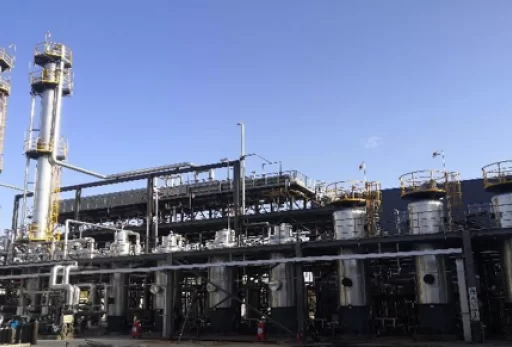
LNG Liquefaction Plant - Pipeline Gas

-Hengkai Natural Gas Liquefaction Project
-Changming Phase II Natural Gas Liquefaction Project
-Hwange Natural Gas Liquefaction Project
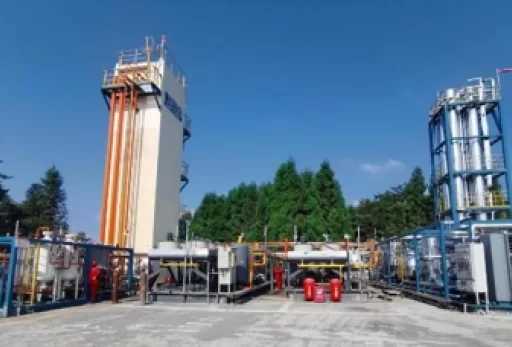
LNG Liquefaction Plant - Coal Bed Methane

-Tianhao Coalbed Methane Liquefaction Project
-Tianyun Coalbed Methane Liquefaction Project
-Shuntai Coalbed Methane Liquefaction Project
Skid-Mounted Product Series and Typical Performance

-60.000 cubic meters/day

-60.000 cubic meters/day

-60.000 m3/day*2 sets

-200.000 cubic meters/day

Contact Us

If you are interested in our products, you can choose to leave your information here, and we will be in touch with you shortly.