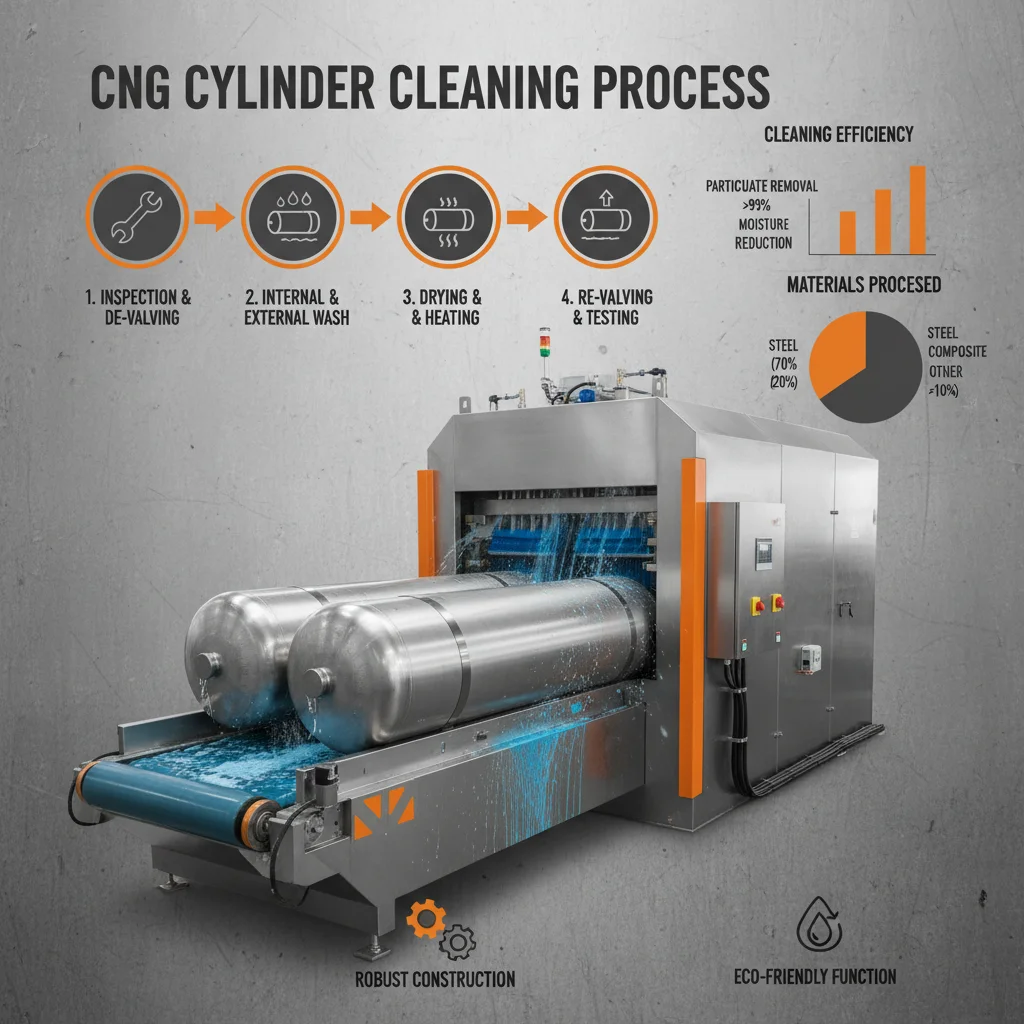
When evaluating the 10 kg cng cylinder price, procurement managers and energy engineers must look beyond the initial sticker cost to understand the total value proposition. In the specialized field of gas compression and separation equipment manufacturing, these cylinders serve as critical nodes in the distribution of clean energy, where material integrity directly impacts safety and operational longevity.
The primary challenge for buyers is balancing the immediate capital expenditure with the long-term costs of certification, maintenance, and gas leakage prevention. Because CNG (Compressed Natural Gas) is stored at extremely high pressures, the cost is heavily influenced by the choice between seamless steel, composite materials, and the specific design standards such as ASME or GB that the vessel must adhere to.
This analysis provides a comprehensive framework for understanding the cost drivers of 10 kg CNG cylinders, comparing technical specifications, and establishing a procurement strategy that optimizes both safety and ROI for industrial and commercial energy applications.

Direct Cost Drivers for CNG Cylinders

The 10 kg cng cylinder price is not a fixed commodity value but a result of several intersecting engineering variables. The most significant driver is the raw material cost, specifically the grade of steel or the type of carbon fiber used in the lining. High-strength alloys required to withstand pressures exceeding 20 MPa increase the base cost but reduce the wall thickness, potentially lowering the total weight of the vessel.
Furthermore, the manufacturing process—whether it is hot-drawing, cold-rolling, or filament winding—determines the labor and energy intensity of production. Precision in the neck threading and valve integration also adds to the cost, as these components are the primary points of potential failure and require stringent quality control to prevent high-pressure leaks.
Technical Specifications and Material Influence
Technical compliance is a non-negotiable component of the pricing structure. Cylinders designed to ASME (American Society of Mechanical Engineers) or GB (Guobiao) standards require different testing protocols, including hydrostatic tests and burst tests, which are reflected in the final price. The design pressure and operating temperature range (typically from -40℃ to 60℃) necessitate materials that maintain ductility under extreme thermal stress.
From a material perspective, the use of specialized steels like Q420R or Q370RS, or high-grade alloys such as SA-517, ensures a higher safety factor. While these materials increase the initial investment, they extend the service life of the cylinder and reduce the frequency of mandatory re-certification and inspection intervals, effectively lowering the cost per year of operation.
Application Scenarios and Capacity Matching
Choosing a 10 kg capacity is typically driven by specific mobility or space-constrained requirements. In industrial gas and electronic gas sectors, smaller cylinders are often used for precision dosing or as portable energy sources for remote equipment. The suitability of a 10 kg unit depends on the consumption rate of the end-user; undersizing leads to excessive refueling downtime, while oversizing increases unnecessary transport costs and safety risks.
In the context of natural gas and hydrogen energy transitions, these cylinders are often integrated into larger manifolds or semi-trailer systems. The integration cost—including the valves, regulators, and mounting brackets—can sometimes equal a significant percentage of the cylinder's own price, making it essential to evaluate the system-level cost rather than the individual component price.
Relative Cost Impact Analysis
To understand the 10 kg cng cylinder price, it is helpful to analyze the relative weight of different cost components. This illustrative framework demonstrates how material quality, certification, and manufacturing precision contribute to the final expenditure. Typically, the material cost is the dominant factor, but for high-specification industrial applications, the certification and testing phase becomes a critical cost driver.
The chart above uses a normalized index to show that while basic materials form the foundation, the "Certification & Testing" and "Precision Engineering" components are what differentiate a standard grade cylinder from a high-performance vessel suitable for the semiconductor or aerospace industries.
Evaluating Supplier Manufacturing Capabilities
The reliability of a supplier is a hidden variable in the pricing equation. A manufacturer with comprehensive qualifications in pressure vessel production can offer more competitive pricing through economies of scale and optimized supply chains. For instance, companies that have integrated research, design, and manufacturing can reduce the lead time and cost associated with customized solutions for high-purity electronic gases or hydrogen storage.
When evaluating a partner, buyers should verify their history of international certifications. Experience with DOT (Department of Transportation) or European standards indicates a level of quality control that reduces the risk of premature vessel failure. A supplier's ability to provide documented traceability for every batch of steel used is a hallmark of professional manufacturing and a safeguard against catastrophic operational failures.
Hidden Costs and Risk Mitigation
The purchase price is only the first step in the total cost of ownership (TCO). Buyers often overlook the costs associated with logistics—specifically the shipping of high-pressure vessels which requires specialized handling and hazardous material permits. Furthermore, the cost of periodic hydrostatic testing and valve replacement must be factored into the operational budget to ensure compliance with local safety laws.
Risk mitigation involves investing in cylinders with superior corrosion resistance, especially if the equipment will be deployed in humid or chemically aggressive environments. Choosing a lower-priced cylinder with inferior coating or material purity can lead to internal corrosion, which not only compromises safety but can also contaminate the gas, making it unsuitable for high-purity industrial processes.
Procurement Decision Matrix
To finalize a procurement decision, buyers should use a structured comparison based on their specific application needs. Whether the priority is low initial cost for short-term use or high durability for long-term industrial infrastructure, the following matrix helps categorize the options available in the current market for 10 kg CNG storage solutions.
| Option Type | Key Cost Driver | Primary Use Case | Main Risk Factor |
|---|---|---|---|
| Standard Steel | Raw Material Volume | General Industrial Use | Higher Weight |
| High-Strength Alloy | Material Grade | High-Pressure Transit | Higher Initial Cost |
| Composite/Hybrid | Filament Winding | Mobile/Vehicle Energy | Complex Repair |
| Ultra-High Purity | Internal Polishing | Electronic/Semi-con | Strict Handling |
| Custom-Engineered | Design/Engineering | Specialized R&D | Longer Lead Time |
| Certified Export | International Testing | Global Distribution | Compliance Costs |
By aligning the "Option Type" with the "Primary Use Case," procurement officers can avoid the mistake of over-specifying (paying for features they don't need) or under-specifying (risking safety and longevity) their 10 kg CNG cylinder investment.
Frequently Asked Questions
The price is primarily driven by material choice (e.g., seamless steel vs. composites), the design pressure rating, and the required certifications such as ASME or GB. Manufacturing precision and the inclusion of high-quality valves also impact the final cost.
Not necessarily, but significantly lower prices often indicate lower-grade materials or a lack of rigorous third-party certification. For high-pressure CNG, the lack of documented hydrostatic testing represents a substantial safety risk.
Evaluate your daily gas consumption and the distance to your refueling station. If your application requires high mobility and small footprints, 10 kg is ideal; however, if refueling downtime outweighs transport costs, a larger vessel is more efficient.
Maintenance involves periodic visual inspections, valve replacements, and mandatory hydrostatic re-testing every few years. These costs vary by region and the specific design standard of the cylinder.
Yes, ASME certification involves stricter material sourcing, more rigorous manufacturing oversight, and documented testing, all of which add to the production cost but ensure global acceptance and safety.
Not unless specifically designed for hydrogen. Hydrogen molecules are smaller and can cause "hydrogen embrittlement" in standard CNG steels. Always verify that the material specification is compatible with hydrogen energy applications.
Conclusion
Determining the 10 kg cng cylinder price requires a holistic approach that integrates material science, regulatory compliance, and operational needs. While the initial purchase price is a critical metric, the true value is found in the balance between safety certifications, material durability, and the total cost of ownership over the vessel's lifecycle.
For organizations seeking reliable equipment for clean energy or industrial gas transport, reviewing technical specifications and supplier capabilities is the most effective way to ensure a secure investment. Further product information and customized storage solutions can be explored at www.enricgroupsjz.com to match specific application requirements.