Our advanced Energy Storage Engineering solutions provide a comprehensive portfolio of large-scale energy management technologies designed to stabilize power grids and optimize energy utilization. Specializing in high-capacity systems, we integrate cutting-edge gas compression, separation, and thermal conversion technologies to bridge the gap between intermittent renewable energy production and consistent industrial demand.
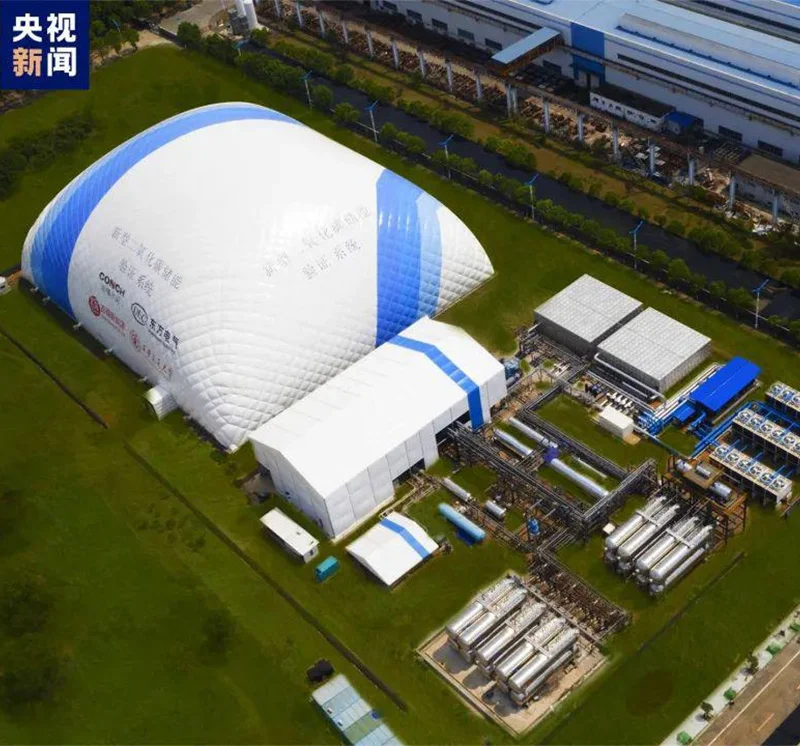
From massive salt cavern compressed air systems to cryogenic liquid air storage and CO₂ integration, our engineering approach focuses on high efficiency, zero carbon emissions, and seamless grid compatibility. By leveraging industrial waste heat recovery and CCUS collaborative operations, we deliver sustainable, long-duration energy storage infrastructure for the global transition to green energy.
| CO₂ Storage Scale | 100MW+ Large-scale Projects | CO₂ Cycle Efficiency | >70% |
|---|---|---|---|
| CO₂ Energy Density | >50kWh/m³ | CAES Discharge Capacity | 250MW/1500MWh Class |
| CAES Discharge Duration | Up to 48 Hours | CAES Efficiency | 72% |
| LAES Temperature | Cryogenic Adiabatic (-196°C) | LAES Emissions | Zero Carbon Emissions |
| Compliance Standard | IEC International Grid Standards | Service Scope | Full-process EPC Services |
CO₂ storage systems achieve over 50kWh/m³, maximizing storage capacity within limited footprints.
CAES systems support discharge for up to 48 hours, providing critical stability for wind and solar power.
Liquid Air Energy Storage (LAES) ensures zero carbon emissions and fast start-stop capabilities.
Our CO₂ systems are designed for collaborative operation with Carbon Capture, Utilization, and Storage.
Optimized for waste heat recovery and cross-regional energy allocation across diverse industrial scenarios.
All grid connections and monitoring platforms fully comply with rigorous IEC international standards.

Real-time tracking of energy flow, pressure levels, and thermal efficiency across the storage network.
Automated synchronization and load balancing compliant with IEC international grid standards.
Predictive maintenance alerts to minimize downtime and extend the lifespan of turbine units.
Advanced analytics for thermal-power conversion and industrial waste heat recovery optimization.
Full-process management from underground cavity renovation to final system integration.
Coordinating supply between wind, photovoltaic, and storage for multi-energy complementary grids.
| Metric | Conventional Battery | Our Advanced Gas Storage |
|---|---|---|
| Operational Lifespan | 5-10 Years | 25-40 Years |
| Environmental Impact | Chemical Waste | Zero Carbon / CCUS Ready |
| Discharge Duration | Short-term (2-4h) | Long-duration (Up to 48h) |
| Scale Capability | Modular / Limited | Large-scale (100MW+) |
| Degradation Rate | High / Linear | Extremely Low |
Compressed Air Energy Storage (CAES) typically utilizes underground caverns for large-scale, long-duration storage, while Liquid Air Energy Storage (LAES) uses cryogenic cooling (-196°C) for distributed, zero-emission scenarios in remote areas.
Our systems can utilize captured carbon dioxide as the working medium for energy storage, effectively turning a waste product into a resource for high-pressure storage and thermal-power conversion.
Our CO₂ storage systems achieve a cycle efficiency of over 70%, while our Compressed Air Energy Storage (CAES) systems operate at an efficiency of approximately 72%.
Yes, specifically our CAES systems are designed for peak shaving to support wind and photovoltaic power, providing long-duration discharge up to 48 hours to stabilize the grid.
Absolutely. All our energy storage system-grid connections and monitoring platforms strictly comply with IEC international grid connection standards.
Our full-process EPC services cover everything from initial underground cavity renovation and design to turbine unit integration and final operation and maintenance (O&M) systems.